Dragonflies
The God of Small ThingsDragonflies recur around the river as part of the twins’ sensuous childhood world, but their appearance also touches the book’s deeper pattern of memory: beauty and play survive alongside the knowledge of what history has done to them.
At the River
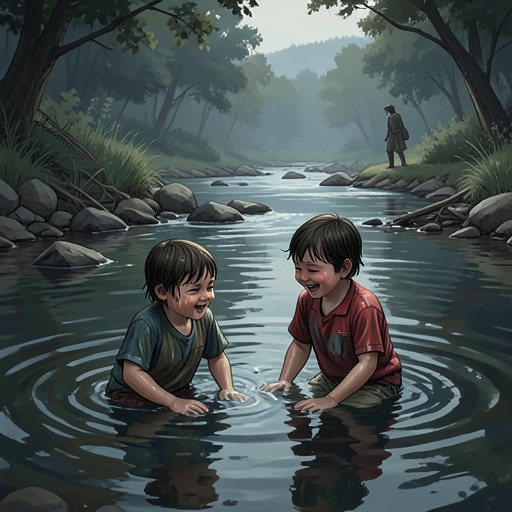
The river is a place where Estha and Rahel learn through attention rather than explanation. They fish with rods made by Velutha from slender yellow bamboo, threading purple earthworms onto the hooks; there they also study silence and learn the bright language of dragonflies. Waiting, watching, and moving when a fish pulls the bamboo down, the children become attuned to a world that does not depend on speech. They know the first third of the river well, while the rest remains less familiar.
That bond with the river returns in Rahel’s thoughts when Ammu calls her out from behind a curtain. Rahel closes her eyes and imagines green water, fish swimming in its depths, and dragonflies whose wings let them see behind themselves in the sun. She turns to this remembered landscape while wishing she were with Velutha, linking the insects to the comfort of the river and to her affection for him.
A Scene of Discovery
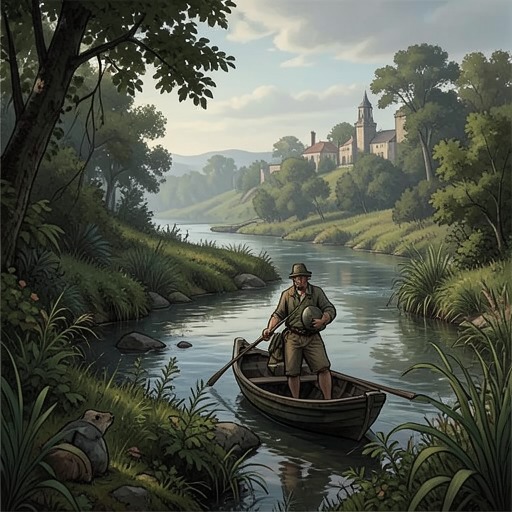
When the twins find the old wooden boat, the narration places hovering, jeweled dragonflies in the sunlight beside the children’s fingers as they fight through ferns and shift stones to clear a way. The insects’ vivid movement accompanies a moment of effort and discovery: the boat makes a hollow sound when knocked, and the children recognize what they have found. Against this scene, the phrase that things can change in a day marks the boat as more than an object; it is the beginning of a plan that will carry the twins toward a place they are not supposed to enter.
Memory and Significance
The dragonflies’ brightness belongs to a childhood world of fishing, observation, and shared silence. Yet the river’s refuge is not outside history. The twins will cross it into forbidden territory and witness history’s violence; its smell will remain with them, lodged in ordinary things and in the absence of words. The recurring insects therefore hold a contrast rather than a simple promise of escape: they evoke the vivid natural world the children know intimately, while the narrative sets that knowledge beside the trauma that silence cannot erase.